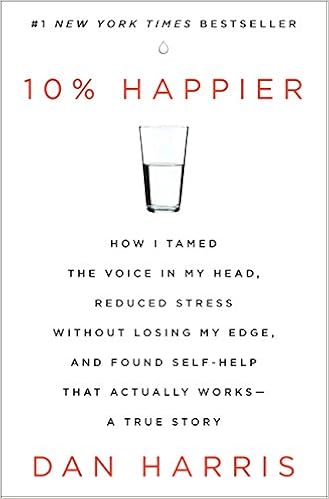
The guy's idea is how to be a striving over-achiever but be mellow, zen and not an asshole by using meditation and mindfulness. How to not be an asshole: Now that's a useful idea for me!
He concludes that it is possible and is lead through a multi-year process by various experts from what he calls the JewBu - (Jewish Buddhist) community of experts. (I notice a squirmy feeling inside at the term JewBu...)
A lot of it is fun, but the thing that bugs me is the repeated stories of him and his expert friends (Mark Epstein, Joseph Goldman, Tara Brach and the like) in some swank office, or swank retreat or, most often, a swank hotel and/or upscale NYC restaurant or bar covering the ideas and Harris asking if he can be Buddhist but still keep his edge and be successful in his high-pressure milieux. Not surprisingly they conclude, 'sure. No problem.' Harris is a TV anchor for Good Morning America, Nightline etc.
Again - my objection is that Buddhism is not inherently good or bad, nor does it depend on who uses it, but rather the effect depends on the context into which it is deployed.
So, buddhism (lower case b here) taken up by highly educated, privileged, driven, pressured neurotics who live in the media-sphere and/or NYC has some strange effects. It's makes you wonder when you hear of marines taking up meditation - the whole zen warrior thing. Seriously - they don't even bat an eye. The uber-achievers have taken up meditation and mindfulness as an adjunct to their current way of life so that they can get even further ahead of the rest of the pack (sure, they'll throw in some compassionate meditation once a week so they don't get bogged down in anger about the rabble clogging the roads and making them late for their next appointment-and then, again, they can shine even more brightly in their own eyes! How awesome must that feel?!
So, the book misses the material conditions of the people that Buddhism is supposed to help. If we use it "on" prisoners are we not just making they more docile? If we sell it to uber-achievers are we not just making them even more "effective"? Is this just a way to increase ROI for big companies, for governments? Is it possible for there to be a secular Buddhism and/or mindfulness that is not just another tool for the tools?
Oh. But hey: I'm taking this all too seriously right? I'm supposed to be all "It is what it is." right?
How can Buddhism be a force for social justice? Is it? Is it just a tool used by people to get ahead? Is that ok?
Hmmm.


No comments:
Post a Comment